Copied to Clipboard
Northern California Real Estate Expert & Author

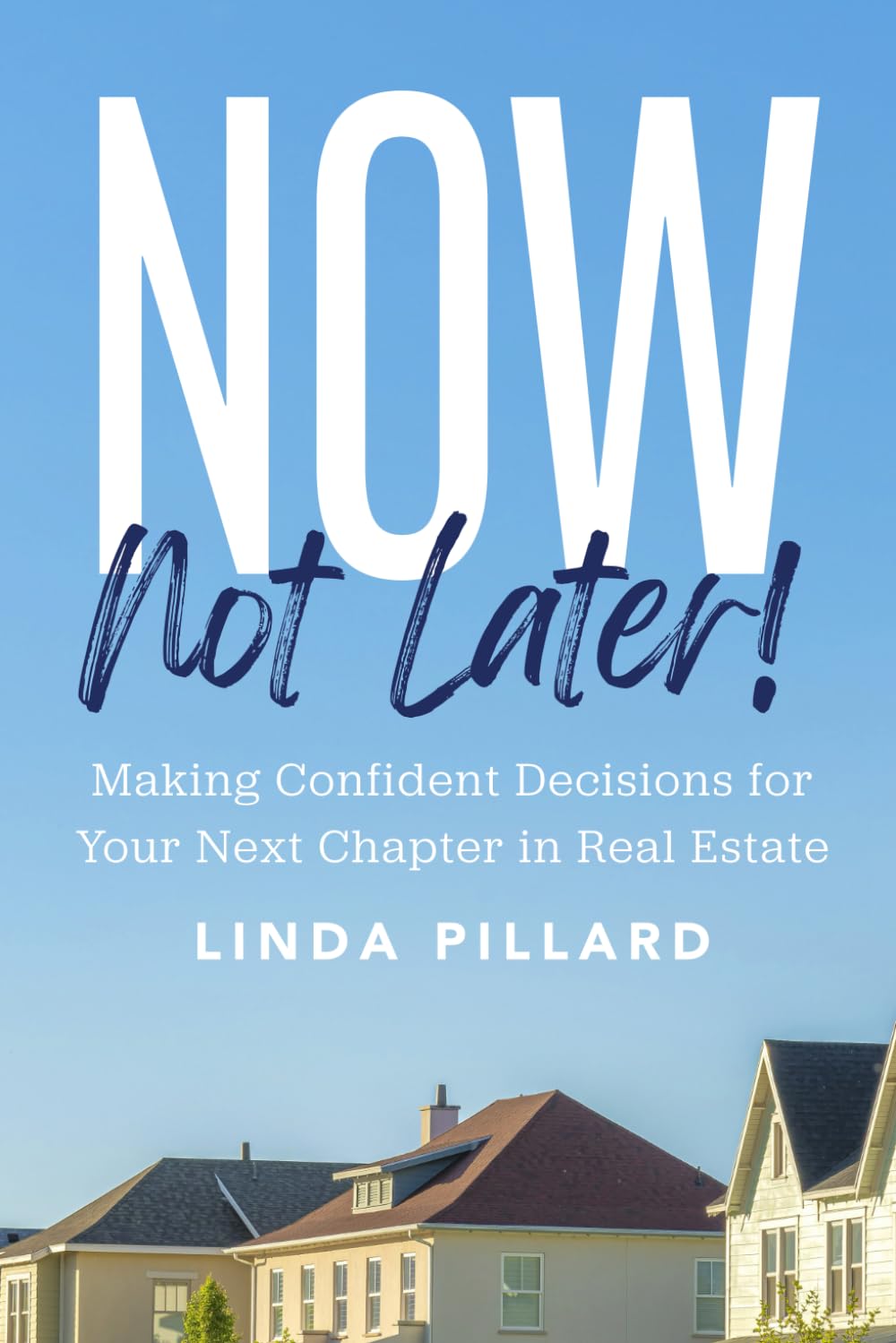
Now, Not Later!

Making Confident Decisions for Your Next Chapter in Real Estate

Whether you're ready to move up from your current home or finally break free from renting, Linda Pillard gives you the clarity and confidence to act — and stop waiting for a "perfect" moment that never comes.

CA License #01208519 Northern California Expert Published Author
Now, Not Later! by Linda Pillard — book cover
CA License #01208519
Northern California Communities
Published Real Estate Author
Decades of Local Experience
Linda Pillard, Northern California Real Estate Agent

CA Real Estate License

#01208519
About Linda

Who You Work With Makes All the Difference

Linda Pillard has spent decades guiding buyers and homeowners across Northern California through some of the most important decisions of their lives. From Sacramento and Yolo County to Colusa, Placer, and Solano County, Linda knows these communities deeply — and she knows how to help you navigate them confidently.

As a licensed California real estate agent and published author, Linda brings a rare combination of local expertise, practical wisdom, and genuine care to every client relationship. She doesn't just help you find a house — she helps you make a decision you'll feel good about for years to come.

Her book, Now, Not Later!, is the distillation of what she's learned from thousands of transactions — offered to you before you ever shake her hand.

Northern California
Expert Markets
2
Guides in One Book
#1
Priority: You
The Book

Two Complete Guides in One

Now, Not Later! was written for two distinct groups of real estate decision-makers — each with their own guide, their own insights, and their own path forward.

Book One · For Homeowners

Beyond the Numbers: A Guide to Life-Centered Real Estate Decisions

For homeowners who've built equity and are ready to make their next move — on their own terms.

  • Why rate obsession traps you in the wrong home for years
  • How your equity changes every affordability calculation
  • The real cost of distance from the people who matter most
  • Why your life clock matters more than the market clock
  • How to write your next chapter in a home that fits who you are now
Book Two · For Renters

Breaking Free: A Renter's Guide to Homeownership

For renters who are ready to stop building their landlord's wealth and start building their own.

  • The invisible wealth transfer happening every time you pay rent
  • Why "perfect timing" is the most expensive myth in real estate
  • How inflation quietly prices renters out while they wait
  • The hidden life costs of staying in temporary housing
  • Your concrete action plan to move from renter to owner
Inside the Book

Explore the Chapters

Every chapter is practical, every insight is earned from real transactions. Click any chapter to read what's inside.

Your home should serve your life, not consume it. Yet many homeowners find themselves spending their prime years managing properties that no longer match how they actually live. Empty bedrooms become storage, formal rooms become mail stations, yards become obligations.

The financial burden extends far beyond the mortgage. Larger homes demand proportionally higher costs across every category of ownership — heating, cooling, maintenance, taxes, insurance, and cleaning. Over ten years, the cost differential between maintaining 3,500 square feet versus 2,000 square feet of similar quality can easily reach $50,000 to $150,000.

Beyond pure finances lies a more subtle cost: the depletion of personal energy and time. Every additional room represents potential projects, seasonal preparations, and ongoing upkeep decisions. The goal isn't to judge the choices you made in previous life stages — it's to create alignment between your current reality and your living environment.

Reflection Questions:

Which rooms in my home carry upkeep but no life, and what is it costing me emotionally, financially, and spiritually to maintain them?

How would my daily rhythm expand if I released the burden of unused space and chose only what actively nourishes me now?

What memories am I holding onto through square footage that could be released to create space for who I am becoming?

When homeowners tell Linda they're waiting for rates to drop, she understands the impulse. But this focus often obscures a fundamental truth: for established homeowners with substantial equity, the traditional affordability equation has changed entirely.

Consider a homeowner with $350,000 in equity purchasing a $500,000 home. They only borrow $150,000 — creating a very manageable monthly payment even at today's rates. Compare this to a first-time buyer financing $400,000. The rate obsession becomes misleading when equity insulates you from rate sensitivity.

The hidden costs of waiting are significant: property taxes, insurance, maintenance, and utilities on your current home continue accumulating. Over two years of waiting for better market conditions, carrying costs alone could reach $40,000 to $80,000 — far exceeding most interest rate savings. The most important calculation isn't the percentage — it's the equation between the life you're living and the life you want.

Reflection Questions:

What would shift in my life if I stopped measuring decisions by percentages and started measuring them by the life I most want to live?

How has my attachment to a "good rate" blinded me from seeing the equity, freedom, and possibility I already hold?

What is the true cost of waiting — what relationships, experiences, or peace am I trading for the illusion of a better number?

Where you live shapes who you see, what you do, and how engaged you remain with the world around you. Distance has a peculiar way of growing heavier with time. What feels like a reasonable drive in your sixties can become prohibitive in your seventies.

A twenty-minute drive to visit grandchildren becomes forty minutes round-trip, plus preparation time, plus the energy required for the journey. As these small increments accumulate, what once felt spontaneous becomes planned, what felt easy becomes effortful. Research consistently shows that social isolation accelerates cognitive decline.

The years spent living at a distance from your priorities are years of connection you cannot recover. Grandchildren don't pause their development waiting for ideal visiting conditions. The window for meaningful connection operates on a timeline that doesn't accommodate indefinite delay — and moving closer while you still have the energy to build new community ties is far easier than waiting until proximity becomes a necessity.

Reflection Questions:

Who do I most want to share ordinary Tuesdays with, and how far am I living from them right now?

How does distance — measured not just in miles but in energy — shape the depth of my relationships?

What would it mean for me to choose proximity over property, connection over features, belonging over square footage?

There are two clocks governing your housing decisions: the market clock and your life clock. While watching market conditions is reasonable, your energy, health, and relationships operate on a different timeline — one that doesn't pause for perfect market conditions or wait for ideal interest rates.

The pursuit of optimal market timing often becomes sophisticated procrastination. Professional economists and Federal Reserve officials — armed with sophisticated models and extensive data — regularly miss the mark on rate forecasts. If experts with every possible advantage cannot reliably forecast market conditions, individual homeowners have even less chance of successfully timing their moves.

Meanwhile, life moves forward regardless of interest rates. Grandchildren don't postpone growing up. Your energy doesn't pause its natural decline while you analyze rate forecasts. The homeowner who waits three years for better conditions to move closer to family misses three years of school events, three holiday seasons, three summers. No amount of interest rate savings can purchase those experiences after they've passed.

Reflection Questions:

Where in my life am I hiding behind the excuse of "better timing" instead of honoring the truth of my life's clock?

How would my decision-making change if I trusted that my energy, health, and relationships matter more than market predictions?

What opportunities have I already lost by waiting, and what opportunities could I reclaim if I acted now?

A home is the stage where your life unfolds, the environment that either amplifies or constrains your daily experiences. Every life contains multiple chapters, each requiring different settings to reach its full potential. The decision to stay or move ultimately comes down to one question: where do you want to write your next chapter?

The trap many homeowners encounter is attempting to write their current chapter in a setting designed for a previous one — clinging to family homes after families have grown, maintaining large properties when interests have shifted toward travel and experiences, staying in locations that served working years but isolate in retirement.

The equity you've built over decades represents stored potential — accumulated freedom that can be deployed strategically to support your vision for your remaining years. This resource can purchase proximity to grandchildren, freedom from maintenance responsibilities, or financial flexibility for deferred experiences. Your future self will thank you for having the courage to align your environment with your aspirations.

Reflection Questions:

If my home is the stage for my life, does the set match the story I long to live in this season?

What dreams, relationships, and freedoms could my equity be redeployed to make possible right now?

What courage would it take to stop forcing a new story into an old setting and instead create a home aligned with my becoming?

When you rent, every dollar belongs to someone else. Month after month, you are building equity — but for your landlord, not for yourself. Your rent covers their mortgage principal, pays down their loan balance, and increases their net worth. Meanwhile, you receive a place to live for thirty days, and then the cycle starts over.

This wealth transfer is invisible but relentless. Unlike mortgage payments, rent never stays fixed — annual increases slowly push costs higher while you build no equity to offset rising expenses. The comfort of renting disguises the true cost of temporary convenience. Every year you delay ownership is a year you cannot reclaim.

True flexibility comes from financial strength, not from the absence of commitments. Homeowners who build equity create options — they can sell, rent out their property, or leverage their equity for other opportunities. Renters who build nothing have only one option: find another rental and start the wealth transfer cycle again.

Reflection Questions:

How has my rent silently built someone else's wealth while leaving me with nothing lasting to show for it?

What would it feel like to redirect my monthly payment into my own future instead of another person's?

What story am I telling myself about safety in renting — and how is that story actually costing me freedom?

The belief that perfect market conditions will align to create an ideal buying opportunity is one of the most seductive and expensive myths in real estate. Real estate markets are influenced by dozens of variables that never align perfectly — low rates, low prices, high inventory, stable employment, and personal readiness all occurring simultaneously is a fantasy.

The perfect timing myth creates moving goalposts. When rates drop, you worry about prices. When prices soften, you fear rate increases. Meanwhile, you're not standing still — you're moving backwards. Every month of rental payments is money that never builds equity; every year of appreciation is wealth creation you miss.

The most successful real estate investors understand a fundamental truth: time in the market beats timing the market. Wealth is built through ownership duration, not purchase timing. The right time to buy isn't determined by market conditions — it's determined by personal readiness: stable income, funds for a down payment, and readiness to stay in the area for several years.

Reflection Questions:

How many years of my life have I spent waiting for "perfect conditions" that never arrived?

What deeper fears am I disguising by pretending I'm just waiting for better timing?

If I shifted from "When will the market be ready?" to "When will I be ready?" — what answer rises up in me?

Inflation attacks renters from multiple directions simultaneously: home prices rise, rents increase, construction costs climb, and the purchasing power of your savings erodes. Every month spent accumulating "just a little more" often results in needing significantly more.

The mathematical reality is harsh. If home prices inflate at 6% annually and you save an extra $1,000 per month, you need to be shopping for homes under $200,000 just to break even. For higher-priced homes, the inflation rate outpaces savings capacity by a wide margin. Inflation compounds — delays become exponentially more expensive over time.

Fixed-rate mortgages are powerful tools against inflation because they lock in your largest expense at today's dollars while the asset typically appreciates with inflation. Homeowners with fixed-rate mortgages are insulated from housing inflation — their largest expense remains constant while their home values rise. The only escape from the inflation squeeze is transitioning from variable housing costs to fixed housing costs as quickly as possible.

Reflection Questions:

How much of my energy is spent saving while the very ground beneath me rises faster than I can climb?

What would it mean for me to stop trying to outpace inflation and instead step into ownership that protects me from it?

In what ways is my delay today compounding into greater limitation tomorrow?

Extended renting creates hidden costs that no financial calculator captures: the limitation of life experiences, the postponement of dreams, and the psychological weight of temporary living that stretches into years. Renting creates a temporary mindset affecting every aspect of daily life — you live in spaces you can't truly make your own, avoiding improvements, quality furniture, pets, and deeper community roots because you "might move soon."

Rental agreements restrict modifications, preventing clients from creating spaces that support their lifestyles, hobbies, and aspirations. This limitation affects artists who can't build proper studios, fitness enthusiasts who can't create home gyms, gardeners who can't cultivate landscapes. Each restriction seems minor individually, but collectively they prevent people from creating environments that support their best lives.

Perhaps the most significant non-financial cost is psychological. Psychology research consistently shows that stable housing contributes to better mental health, stronger social relationships, and improved life satisfaction. Every month in temporary housing is a month you're not fully living in a permanent space. The question isn't whether you can afford to buy — it's whether you can afford to keep limiting your life while you wait for someday to arrive.

Reflection Questions:

What parts of myself — my creativity, my relationships, my dreams — have I held back because my space feels temporary?

How has the impermanence of renting shaped the way I make decisions about my life, love, and future?

What life am I postponing that I could begin living right now in a home of my own?

The transition to homeownership begins in your mind, not your bank account. Successful buyers share key mental shifts: from perfect conditions to good enough conditions, from renting mentality to equity-building focus, from flexibility fears to stability benefits. These mindset shifts transform how you approach housing decisions entirely.

Financial readiness assessment covers income stability, debt-to-income ratio, down payment resources, emergency fund, and credit score health. Life stability assessment covers geographic plans, relationship alignment, career trajectory, and anticipated life changes. Many programs allow 3–5% down payments, and the equity protection benefits often outweigh a higher initial mortgage balance.

The difference between renters who successfully transition to ownership and those who remain stuck isn't financial capacity or market timing — it's the decision to act despite uncertainty. Every week spent researching perfect conditions is a week of rent payments building wealth for someone else. The perfect time to buy is not when headlines say the market is ideal. The perfect time to buy is when your life says you're ready and your budget says you can afford it.

Reflection Questions:

What would shift if I saw homeownership not as a burden of responsibility but as a declaration of my readiness to live fully?

How could I move from analysis to action and let imperfect conditions still create perfect momentum for me?

What is the story my future self would thank me for writing today — one of hesitation or one of bold freedom?

What You'll Discover

The Insights That Change Everything

Every page of Now, Not Later! is built on what Linda has seen work — and fail — in thousands of Northern California real estate transactions.

⚖️

The Equity Advantage

Why established homeowners' equity position fundamentally changes every affordability calculation — and makes rate obsession misleading.

Two Different Clocks

The market clock and your life clock operate on completely different timelines — and which one you honor will determine the quality of your next decade.

📍

The Geography of Connection

Distance grows heavier with time. What feels manageable in your sixties can become prohibitive in your seventies — and the years spent distant are years you can't recover.

🔑

The Wealth Transfer

Every month you rent, you're building equity for your landlord. The hidden cost of the rent trap is far larger than most renters ever calculate.

📈

The Inflation Squeeze

Inflation attacks renters from multiple directions simultaneously. A fixed-rate mortgage is the most powerful protection against rising costs available to you.

🏡

Life-Centered Decisions

The most successful housing decisions are made when people align their moves with their life circumstances — not external market conditions.

Common Questions

Frequently Asked Questions

The right time to buy is determined by your personal readiness, not market perfection. If your income supports the payment, you plan to stay in the area, and you're ready to stop building someone else's wealth, current conditions may be exactly right for you. Linda helps you assess your specific situation honestly.
Waiting for perfect market timing rarely works — and it's more expensive than most buyers realize. Inflation, rising rents, and increasing home prices often cost more than any savings from a lower rate. If you buy now and rates improve later, you can refinance. You can't go back and reclaim the equity you missed while waiting.
Linda serves a wide range of Northern California communities including Sacramento County, Yolo County, Colusa County, Placer County, and Solano County — including areas like Sacramento, Natomas, West Sacramento, Woodland, Davis, Vacaville, Dixon, and more. Contact Linda to discuss your specific area.
It's never too late — but every additional month of waiting has a real cost. As one of Linda's clients said after twelve years of renting: "Those twelve years cost me almost $400,000 in rent and probably $200,000 in equity I could have built. The only thing worse than starting late would be never starting at all." The best time to start is now.
Start by understanding your equity position and having an honest conversation about what your current home is actually costing you — financially, physically, and emotionally. Linda walks every homeowner client through this assessment. The equity you've built is a powerful resource that can fund your next chapter. Call or text Linda to begin that conversation.
Now, Not Later! is available on Amazon. Use the "Buy on Amazon" button anywhere on this page to go directly to the listing. You can also reach out to Linda directly — she'd love to connect with you about the book and how she can help you with your next real estate move.
Get the Book

Your Next Chapter Starts With One Decision

Now, Not Later! was written for people exactly like you — people who know they need to make a move but keep finding reasons to wait. Linda Pillard has spent decades watching people wait for perfect conditions that never come, and she wrote this book so you don't have to learn those lessons the expensive way.

  • Two complete guides — one for homeowners, one for renters
  • Practical, not theoretical — every insight comes from real transactions
  • Reflection questions at the end of every chapter to personalize your path
  • Written by a Northern California expert who has seen it all
  • Available on Amazon — get your copy today
amazon Buy on Amazon
Now, Not Later! by Linda Pillard
Get in Touch

Contact Linda

Ready to make your move? Linda is here to guide you through every step — from your first conversation to the keys in your hand. Call, text, or email today.

Call or Text
530-713-6121
Copied to Clipboard
Email Linda
l.pillard@gmail.com
Copied to Clipboard
License Number
CA DRE #01208519
Business Website
lindapillard.com
Linda Pillard, Northern California Real Estate Agent

CA Real Estate License

#01208519